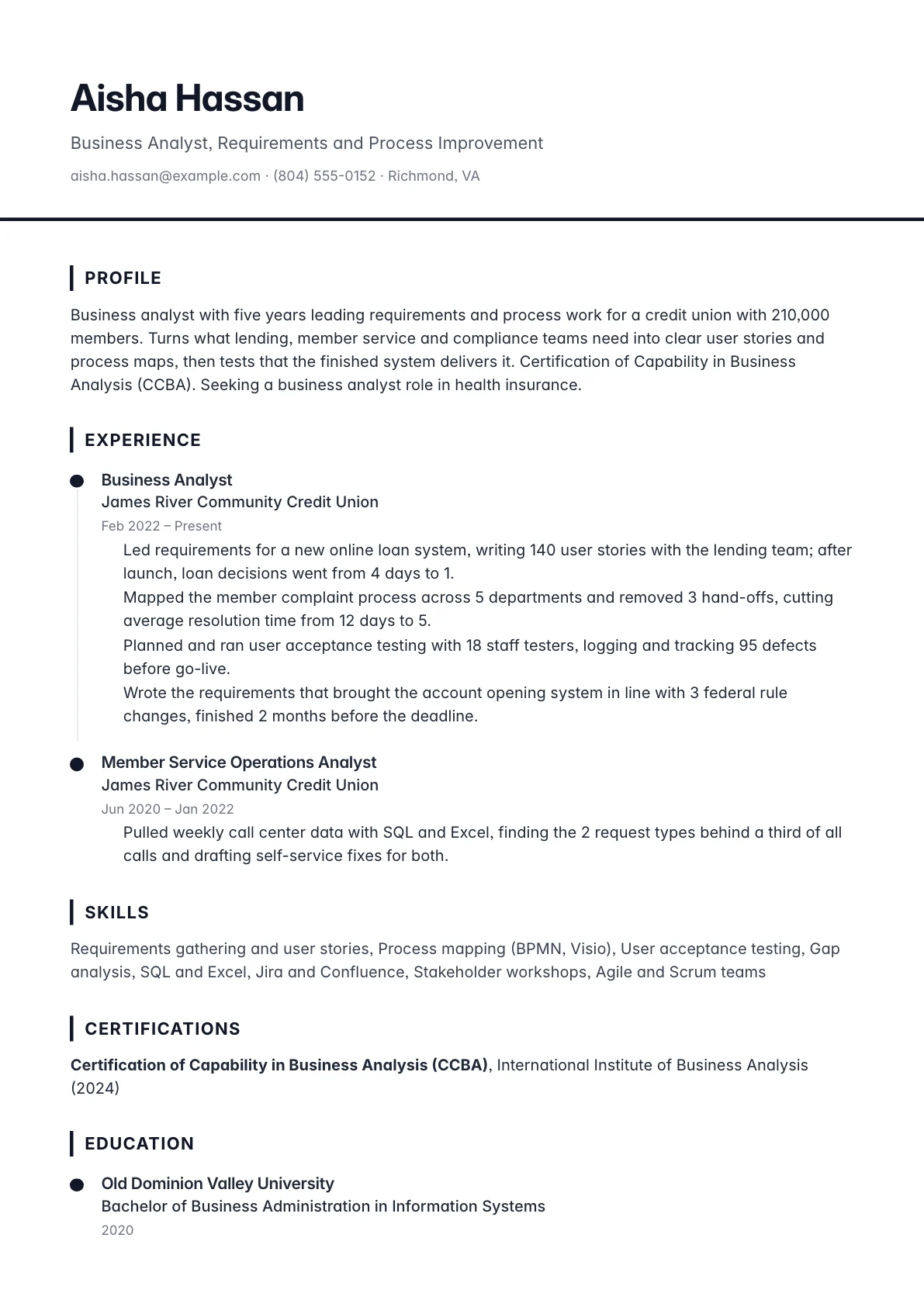
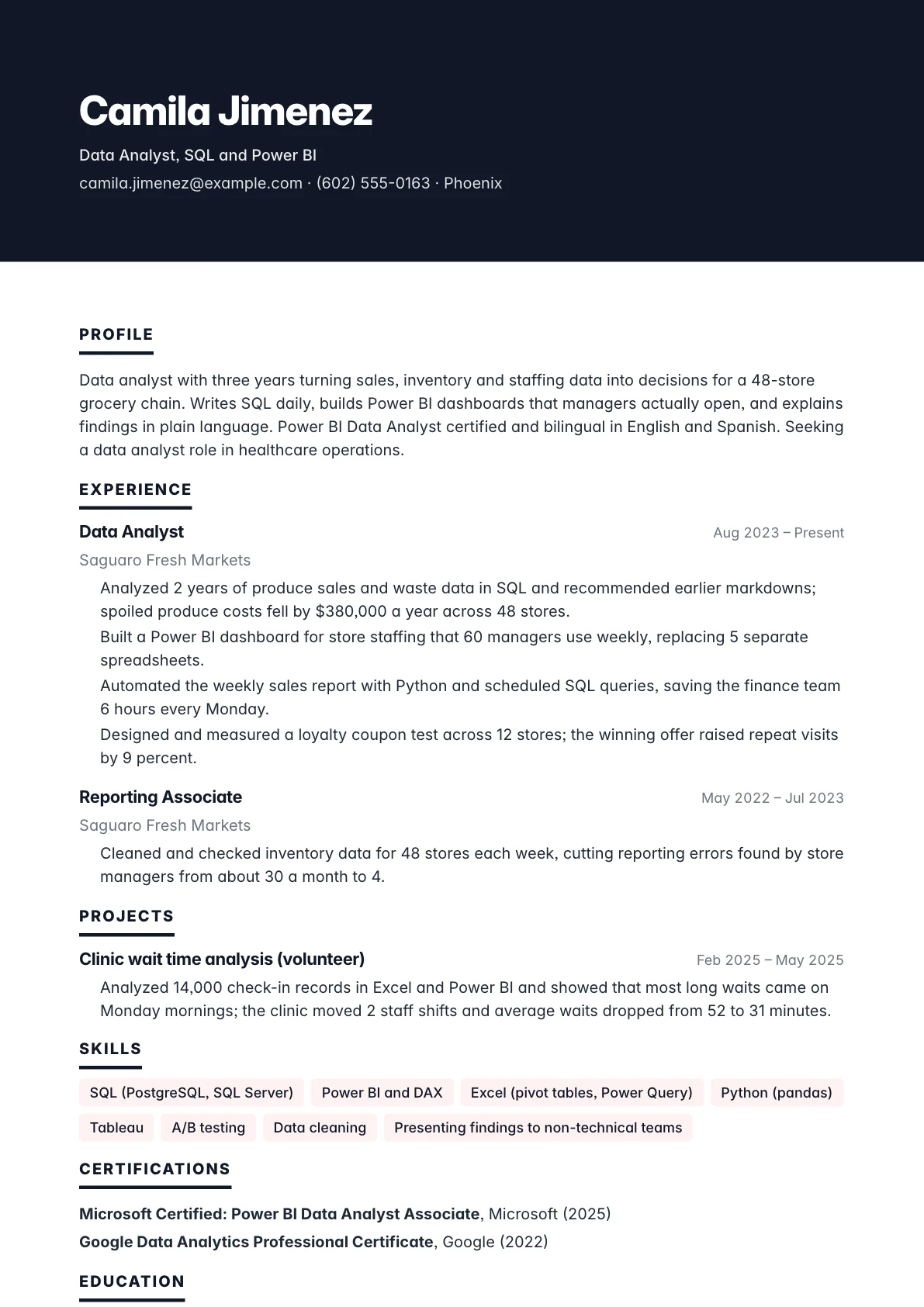
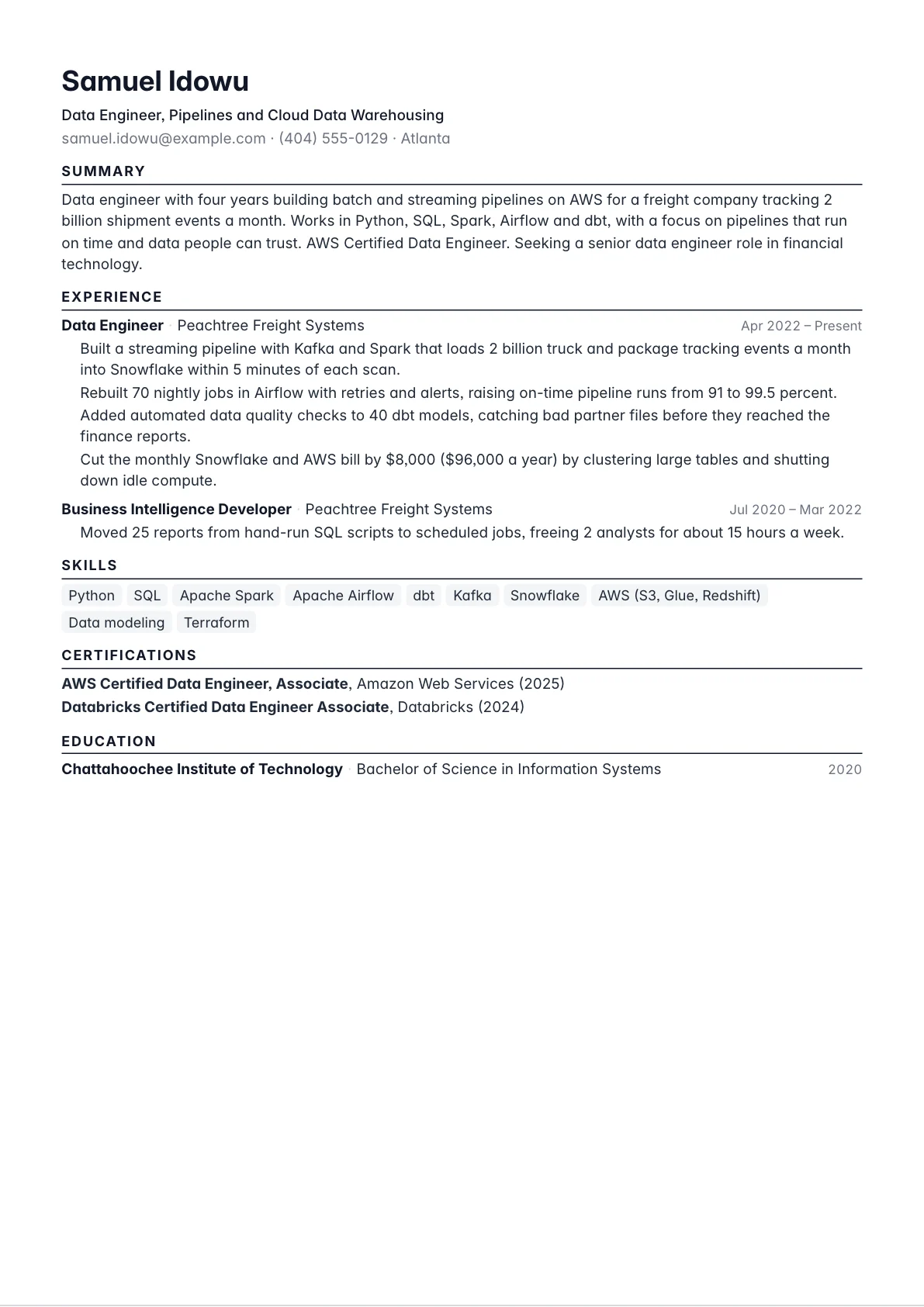
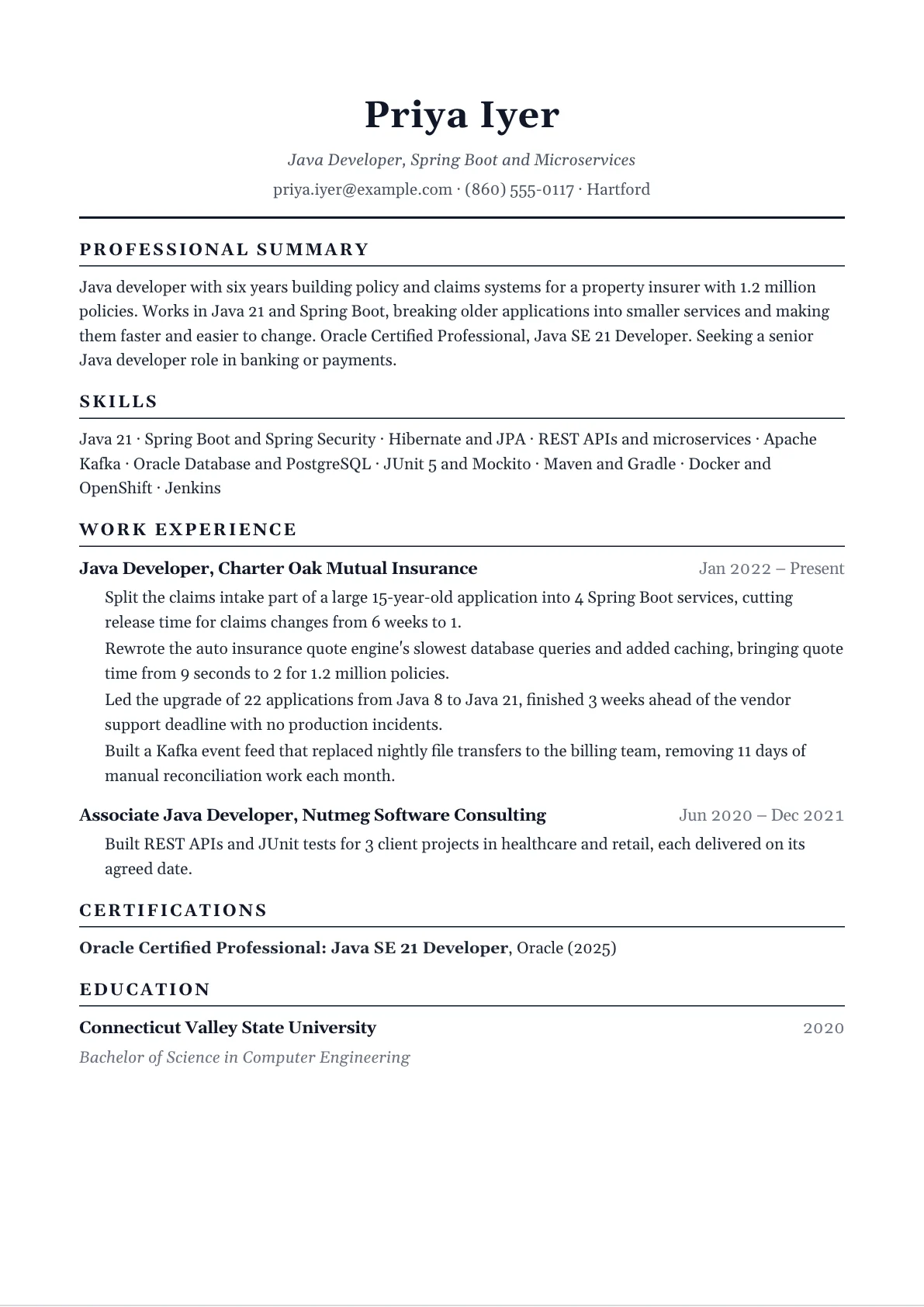
What a tech hiring team checks first
Two readers, two questions. The recruiter asks whether you have the stack. The technical reader asks what you did with it and at what scale. A strong tech resume answers both:
- Skills grouped by type. Languages, frameworks, cloud platforms, databases, tools. List only what you could talk through in an interview, and use the same names the posting uses: PostgreSQL, not databases.
- Scale in every role. Requests a day, rows a night, devices on the network, users of the feature, people on the team. Size tells a technical reader how hard the work was before they read a single verb.
- What you owned. Designed and shipped and contributed to mean different things to an engineering manager. Say which parts were yours, and name the result: faster pages, fewer outages, a report someone now uses every week.
- A link only if it holds up. A GitHub, portfolio or Tableau Public page helps when it has work worth opening. A broken or empty link hurts more than no link.
One page is enough for most people in these examples until about ten years of experience. Senior engineers and architects can use two, as long as page one carries the skills and the latest roles.
Certifications: optional, but some carry weight
None of these jobs needs a license. Certifications are optional, and the ones worth listing depend on the job. Each example page names its issuing bodies and links them. In short:
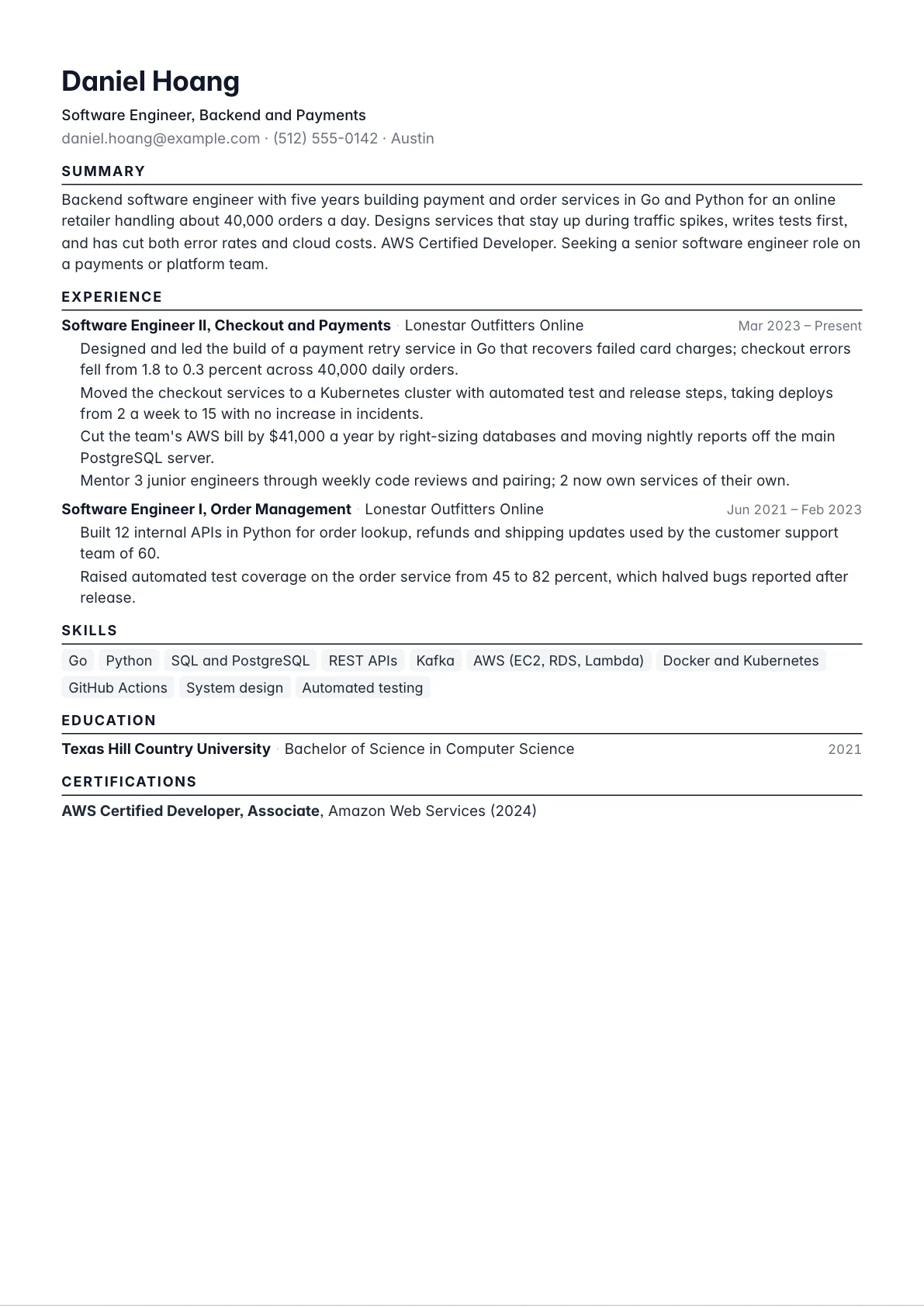
- Software engineer and Java developer: cloud certifications such as the AWS Certified Developer, Associate appear in backend and platform postings, and Java postings name Oracle's Java SE certification.
- Data analyst: the Microsoft Power BI Data Analyst Associate or a Tableau certification from Salesforce, or the beginner-level Google Data Analytics Professional Certificate if you are starting out.
- Data engineer: the certification for the platform the employer runs, from AWS, Google Cloud, Microsoft or Databricks.
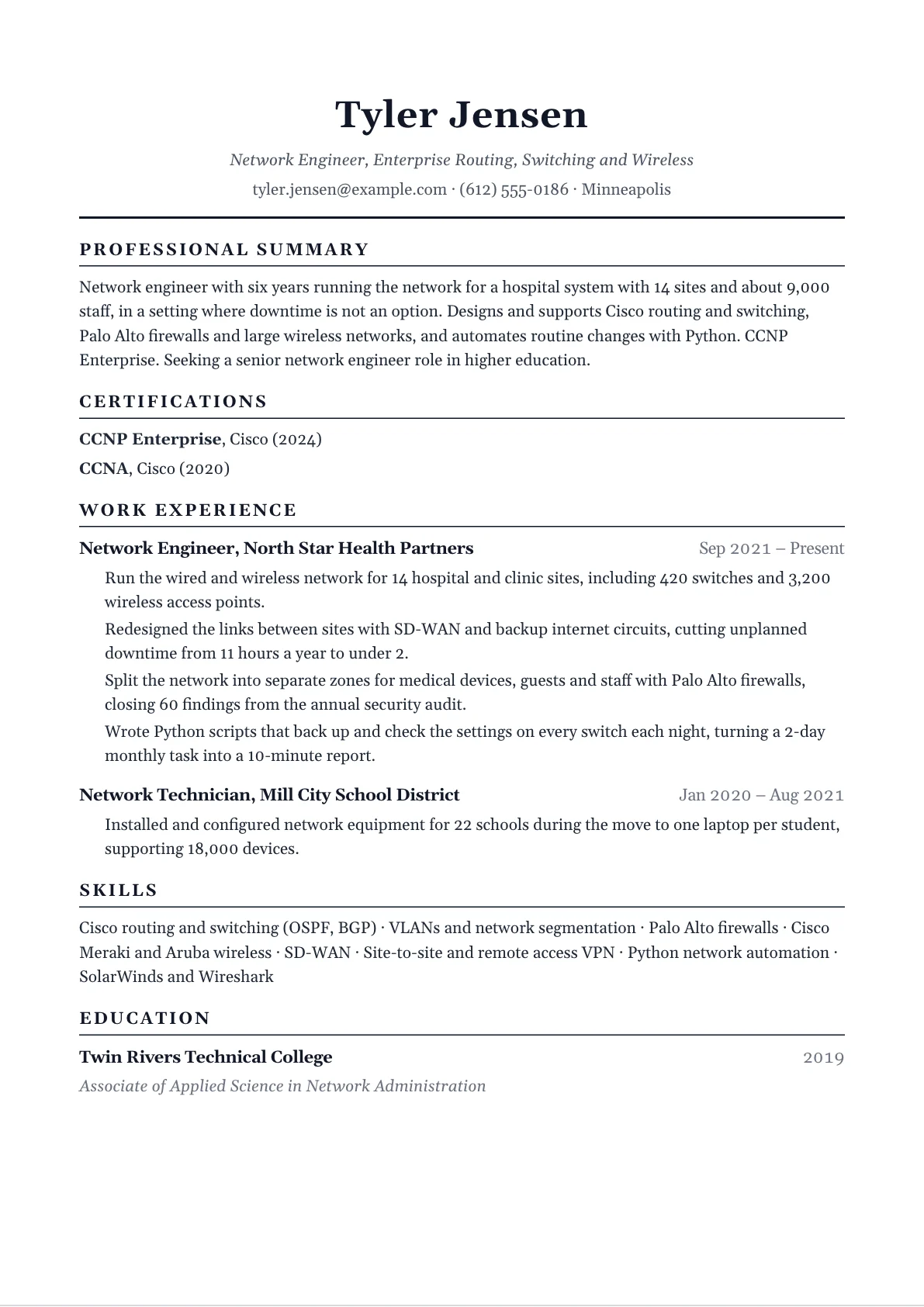
- Network engineer: the field where certifications matter most, since postings often list one as required or preferred. Cisco's CCNA and CCNP Enterprise and CompTIA Network+ are the common ones.
- Business analyst: IIBA's ECBA, CCBA and CBAP, at rising levels of experience, or PMI's PMI-PBA.
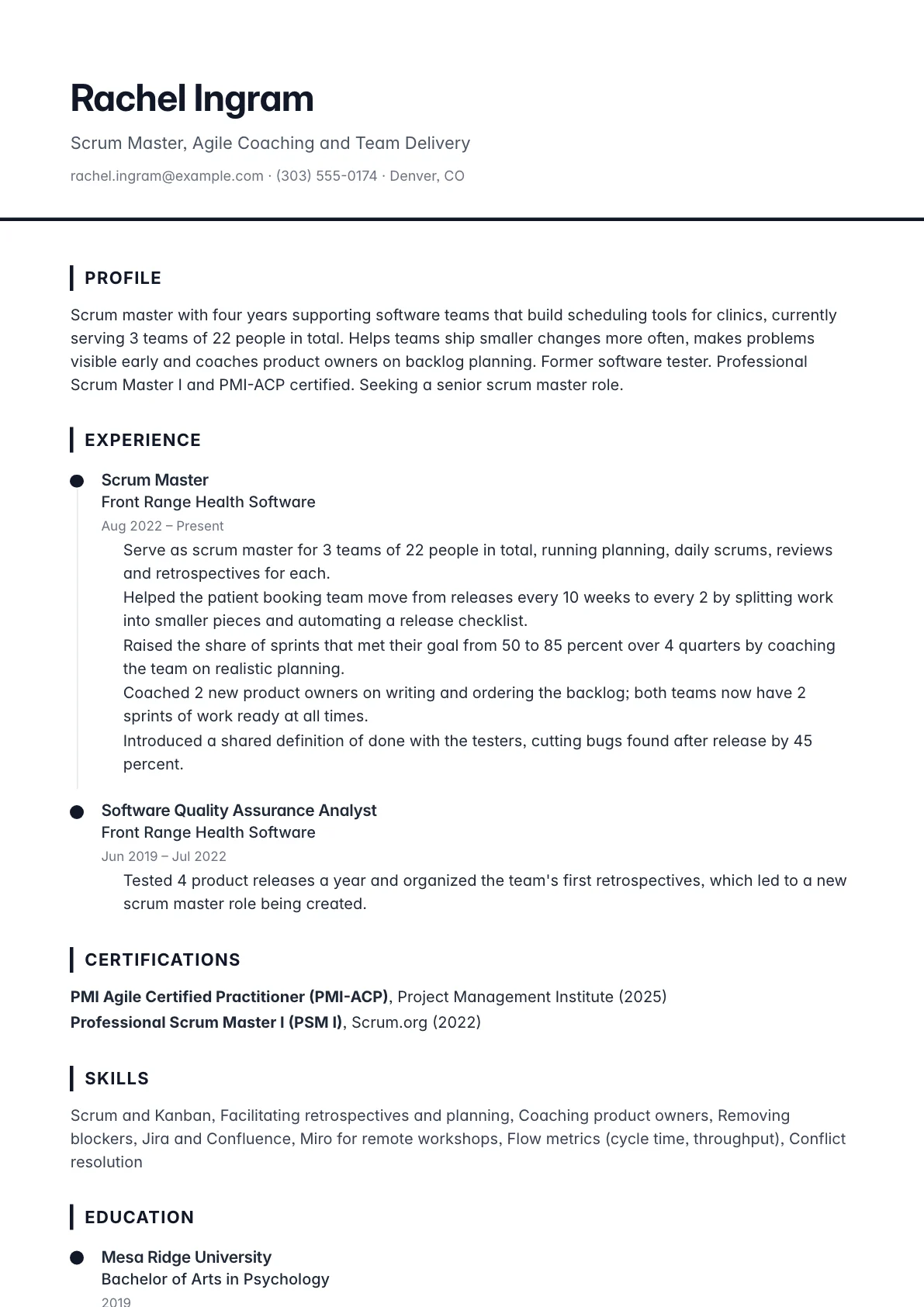
- Scrum master: Professional Scrum Master I from Scrum.org or Certified ScrumMaster from Scrum Alliance, and SAFe Scrum Master in large organizations.
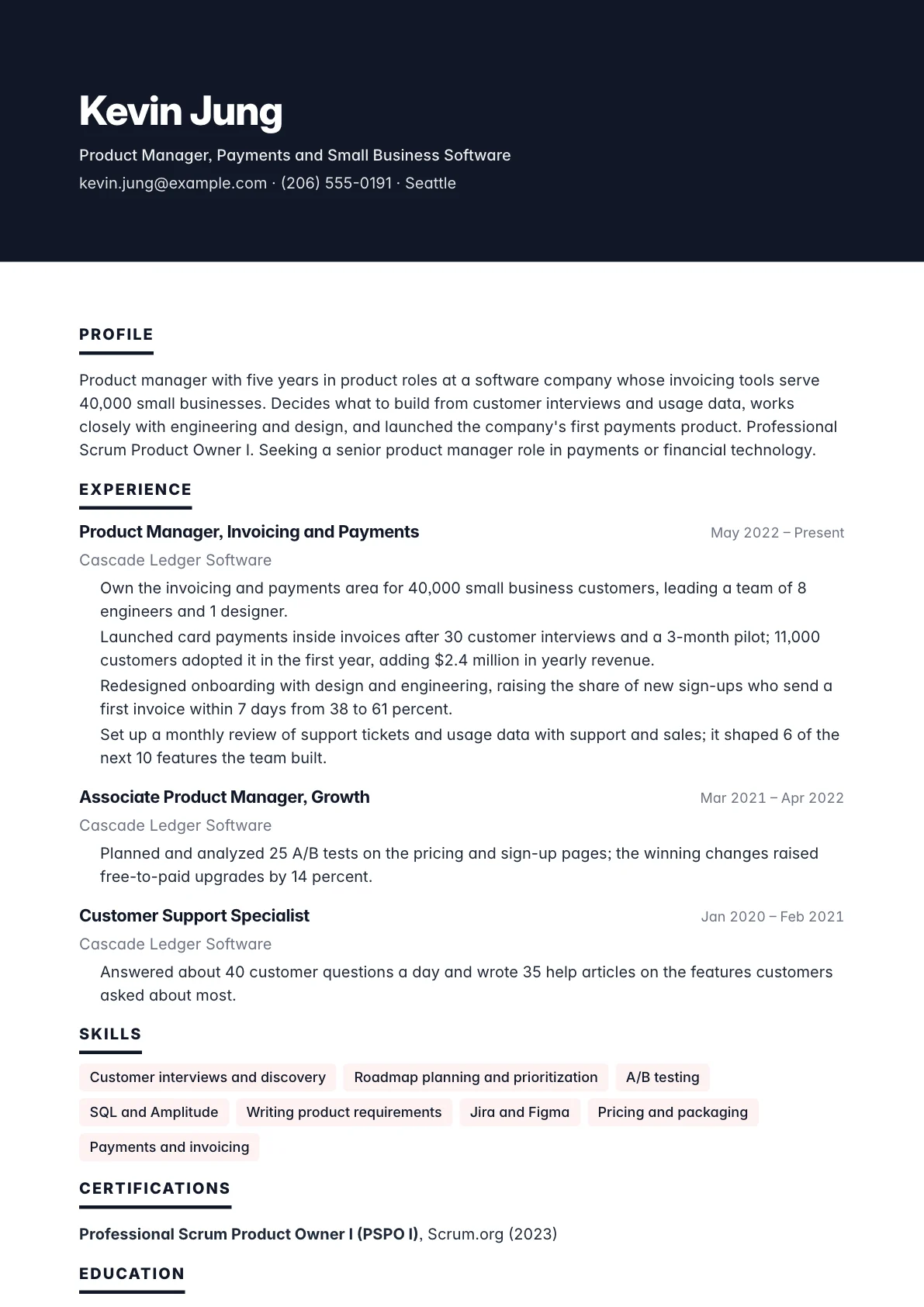
- Product manager: optional, since most employers hire on experience and results. Product owner certifications such as PSPO I or CSPO come up on teams that use Scrum.
Which example should you start from?
Use the example for the job in the posting, even if your current title is different. These are the choices people most often weigh:
- Analyst or engineer? A data analyst answers business questions with SQL, spreadsheets and dashboards. A data engineer builds and runs the pipelines that deliver that data. If the posting talks about reports and stakeholders, use the data analyst example; if it talks about pipelines, warehouses and orchestration, use the data engineer one.
- General or language specific? If the posting is built around Java and Spring, the Java developer example shows how to put the language first. For anything broader, start from software engineer.
- Building or leading delivery? Moving from hands-on work into running a team's process fits the scrum master example, written for someone who started as a software tester. Deciding what a team builds fits the product manager example.
- Still getting in. Students aiming at a software placement can follow the internship guide, whose example is a computer science student. The entry level guide shows a certificate graduate applying for an IT help desk job, and the career change guide helps if you are coming from another field.
Tech jobs in official numbers
According to the U.S. Bureau of Labor Statistics, employment in computer and information technology occupations is projected to grow faster than the average for all occupations from 2025 to 2035, with about 280,000 openings a year. The median annual wage for the group was $109,470 in May 2025, against $50,980 for all occupations.
Not every job on this page sits in that group. Government statistics count business analysts as management analysts, product managers under marketing managers, and scrum masters with IT project managers. The table above names the official group behind each job's pay and outlook.
Frequently asked questions
What should go at the top of a tech resume?
Your name, contact details and, if it has real work on it, a GitHub or portfolio link. Then a headline naming the kind of role you want, such as Backend Software Engineer or Data Analyst, and a short summary with your main tools and one result.
Should I list every programming language and tool I know?
No. List the ones you could discuss in an interview, grouped by type, and put the ones the posting names first. A long list of tools you used once makes the reader doubt the rest.
How long should a tech resume be?
One page for most people with under ten years of experience. Senior engineers and architects with long careers can use two, as long as the first page holds the skills and the most recent roles.
Are certifications worth it for tech jobs?
It depends on the job. In networking they often appear in postings as required or preferred. For software and data roles they are optional but can help a newer candidate or career changer prove hands-on skill with a specific platform.
Do I need a degree to work in tech?
No license is required for any job on this page. The Bureau of Labor Statistics lists a bachelor's degree as the typical entry-level education for software developers, network architects and database administrators and architects, so your resume should make up for a missing degree with projects, certificates and related work.
How do I show tech skills without a tech job?
Use a projects section with two or three pieces of real work, each with the problem, the tools and the result, plus any certificate you have earned. The entry level example shows how that looks on the page, and the data analyst guide explains what makes a portfolio project worth linking.
How do I describe work that was done by a team?
Name the team's result, then your part in it: the service you designed, the tests you wrote, the migration you led. A technical reader wants to know exactly what you would bring, not what the whole team shipped.
Where do the pay and outlook figures come from?
From the U.S. Bureau of Labor Statistics Occupational Outlook Handbook, and from O*NET OnLine for jobs the handbook does not profile. Several jobs here are counted inside a wider official group, and each example page names that group and links its exact source.
Build your tech resume
Start from any example above or from a blank page. The builder is free, needs no account, and the PDF comes without a watermark.
Build your resume, free