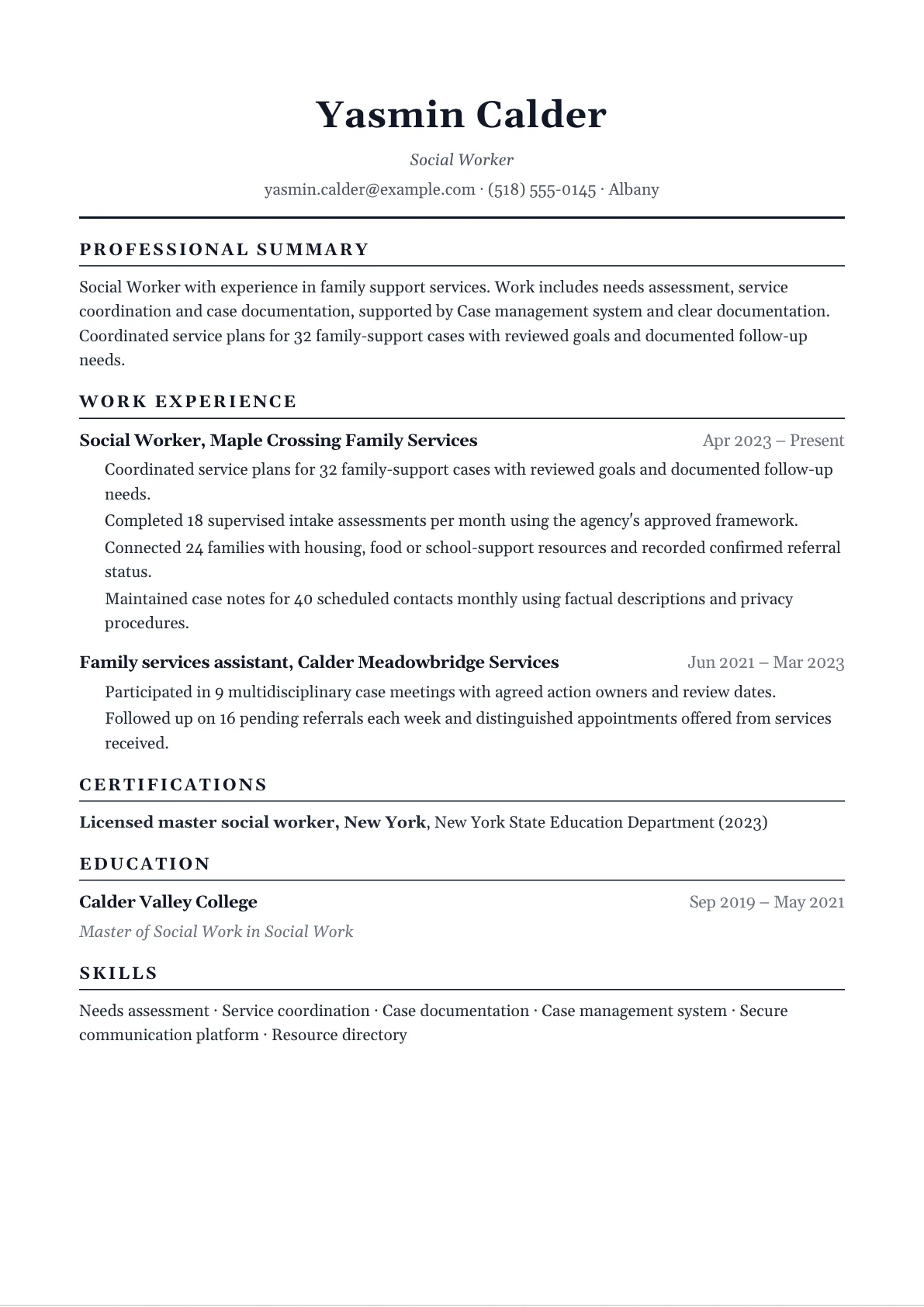
What agencies and programs look for
Your reader may be a police department's recruiting unit, a county human services office, a nonprofit program director or a hospital's care management team. The jobs differ, but these resumes are read for the same things:
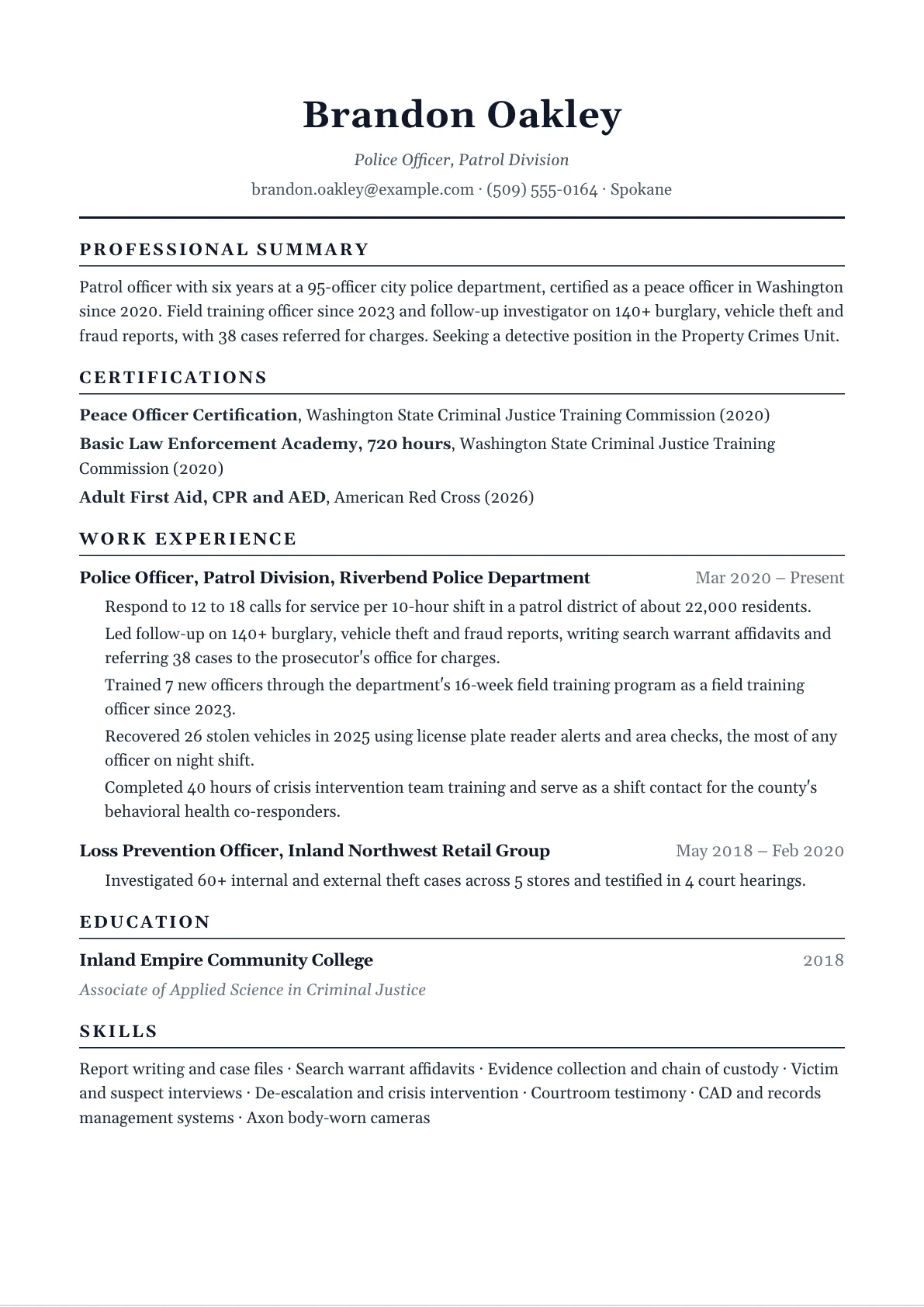
- Proof you are qualified to do the work. A state peace officer certification, a social work or nursing license, a case management certification, an academy with its hours, or a degree. Put it right after the summary with the body that issued it and the year.
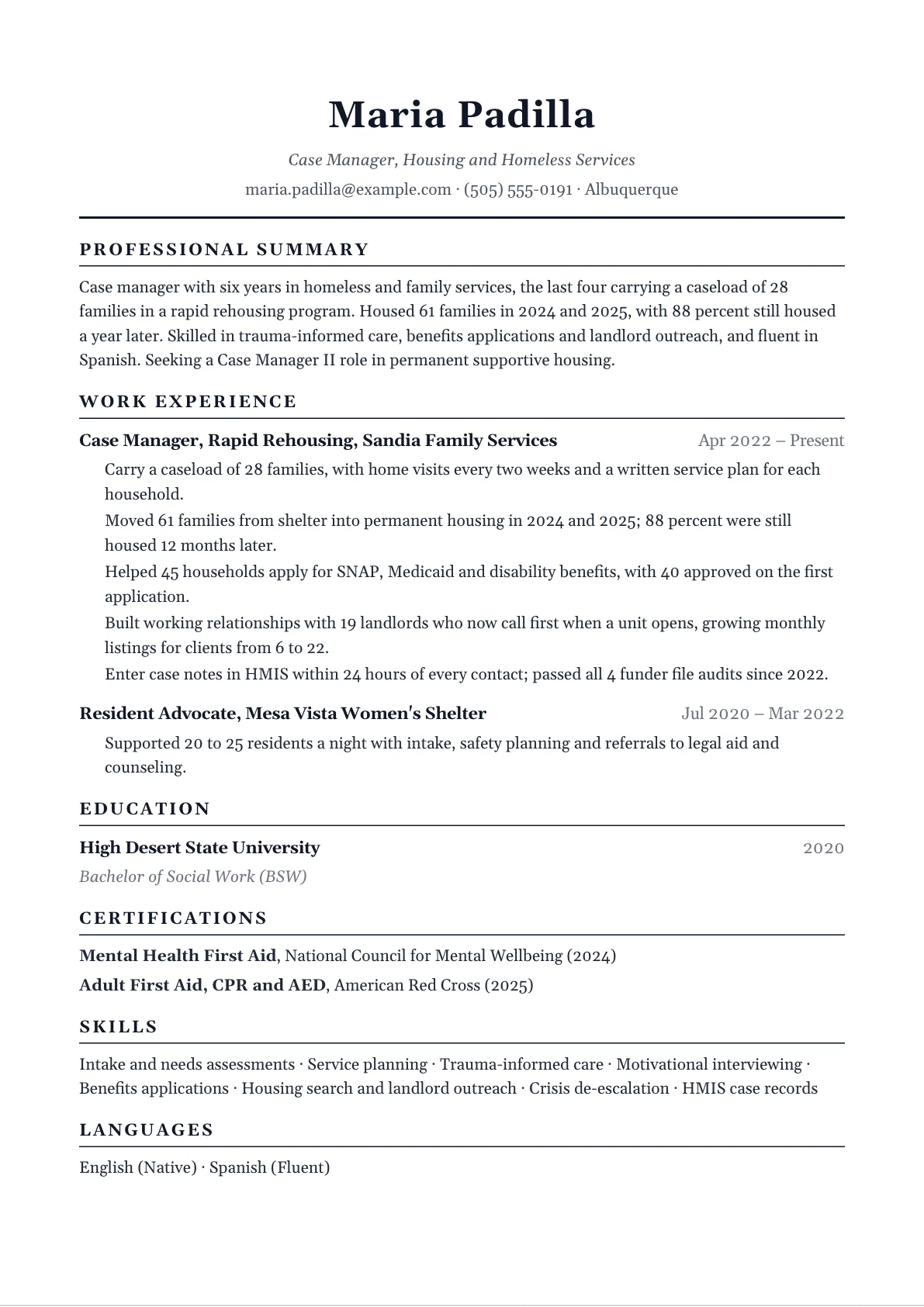
- Who you served and where. A patrol district and its call volume, a caseload of families, a shelter, a school or a hospital unit. Carried a caseload of 28 families with home visits every two weeks tells a supervisor the size and rhythm of your work at once.
- Outcomes, not only duties. Families housed, benefits approved, cases referred for charges, crisis calls resolved without force, new staff trained. A duty list reads like the job posting; an outcome shows what changed because you were there.
- Steadiness. De-escalation, crisis intervention, work across cultures and languages, and long or irregular shifts. Show them in bullets with numbers rather than as adjectives.
Certification and licensing by job
Requirements in this field depend on the job, the state and the agency that hires you. Each example page explains its own requirements and links the official source. For the examples here so far:
- Police officer: every sworn officer finishes a basic academy and is certified or licensed by the state, through a body usually called POST (Peace Officer Standards and Training). You can find each state's agency in the directory kept by IADLEST, the association of state POST directors.
- Case manager: it depends on the setting. Many social services roles ask for a degree and experience rather than a license, while hospital and health plan roles often need a social work or registered nurse license. Social work licensing exams are developed by the Association of Social Work Boards, and each state decides which licenses and exams it uses.
Because states set these rules, moving to a new state can mean new steps. Check with that state's board or agency before you apply, and say on your resume where you are certified or licensed now.
Writing about sensitive work
Much of what you do in this field is confidential, and the way you describe it is itself a test of judgment. A few rules keep you safe:
- No names or identifying details. Leave out client names, case numbers, badge numbers and any story someone could recognize. Use counts and general descriptions instead.
- Numbers over anecdotes. Calls answered, reports written, caseload size, visits a month, referrals completed, people trained. They make the point without a single private detail.
- Keep it matched to the official record. Many agencies use their own application forms, and police hiring includes a background investigation, so use the same titles and dates everywhere.
Which example should you start from?
Start from the job you are applying for. These routes are common:
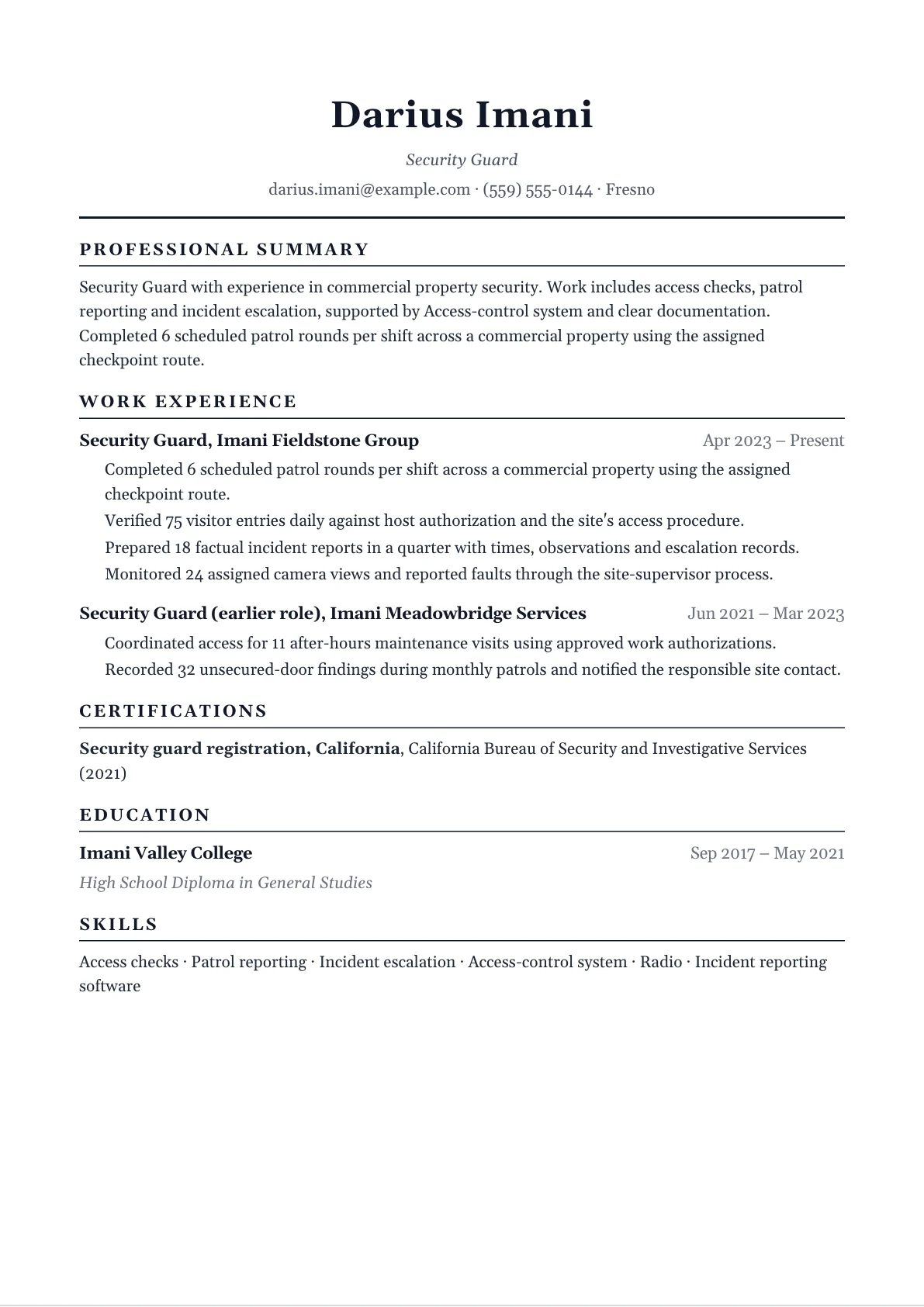
- Law enforcement and protective jobs. Start from the police officer example, which shows how to list a state certification, academy hours and specialty training.
- Social services and care coordination. The case manager example shows how to write about caseloads, service plans and outcomes.
- Coming from the military. If you served, the military to civilian guide shows how to put ranks, duties and training into civilian words.
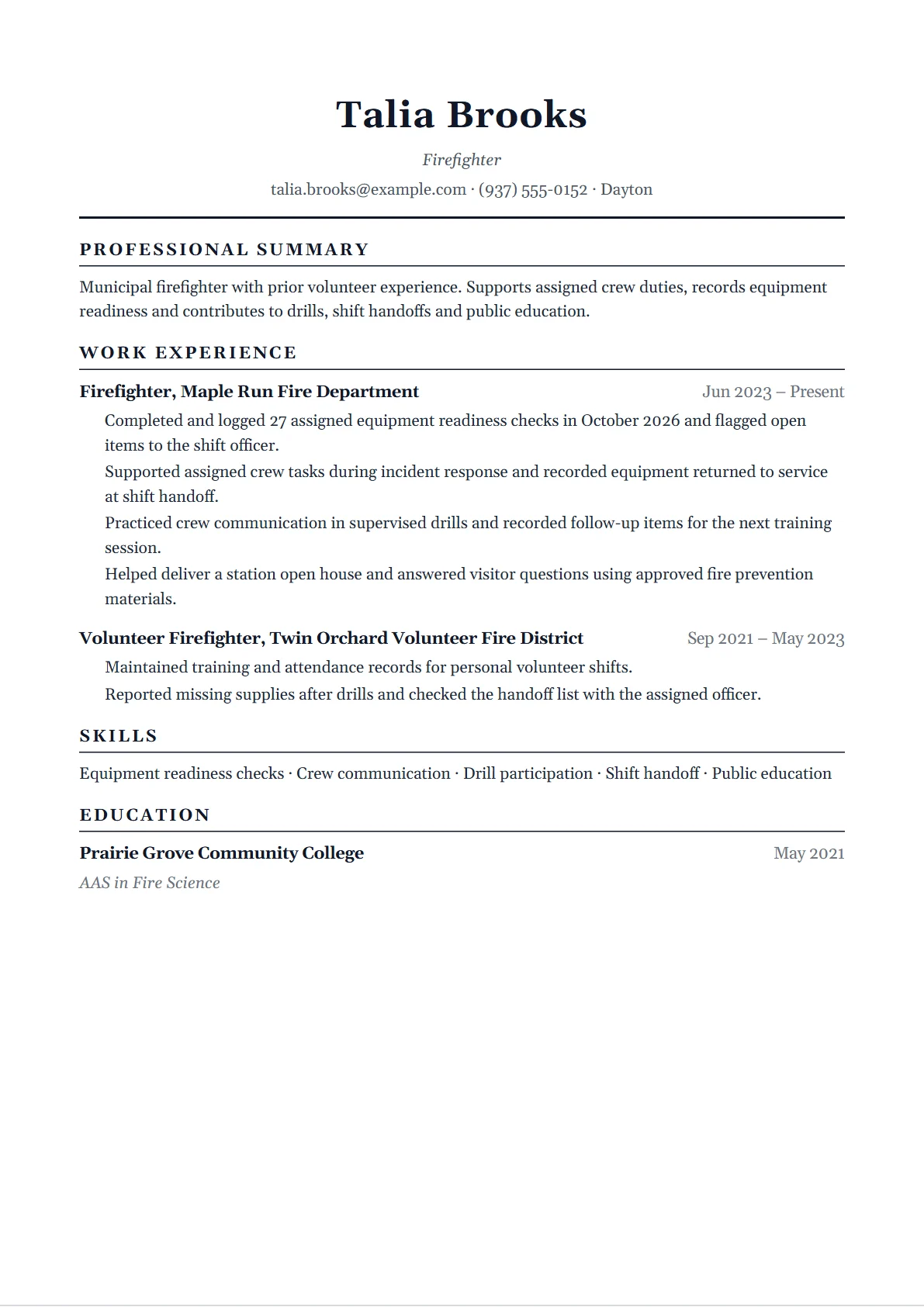
- Starting from volunteer work. Shelter shifts, mentoring and crisis line hours count. The volunteer experience guide shows how to list them like jobs.
- Applying for a federal job. Federal applications follow their own rules; see the federal resume guide.
Public service and social care jobs in numbers
According to the U.S. Bureau of Labor Statistics, employment in protective service occupations, which include police officers, is projected to grow slower than the average for all occupations from 2025 to 2035, with about 414,200 openings a year and a median annual wage of $50,080 in May 2025. Community and social service occupations are projected to grow much faster than average over the same period, with about 293,400 openings a year and a median wage of $58,300. The median for all occupations was $50,980. The table above gives the figures for each job, including jobs whose official data comes from O*NET OnLine.
Frequently asked questions
What should I put at the top of a public service resume?
Your name and contact details, a headline with your role and setting, a short summary, and then your certification, license or academy. In jobs that require a credential it is checked first, so it should sit above your experience.
Do I need a resume if the agency uses its own application form?
Not always, since many agencies use their own form. A resume still helps when one is requested, for lateral moves, promotions and specialty assignments, and it keeps your dates and titles consistent across every document you submit.
How do I describe clients or incidents without breaking confidentiality?
Describe the kind of person or situation in general terms and give numbers: a caseload of 30 adults leaving shelter, 12 crisis calls a month, 40 reports written. Never include names, case or badge numbers, or details that would let someone be identified.
Can I use my certification or license in another state?
Each state decides whether and how it accepts credentials from elsewhere, for police officers and for licensed social workers and nurses alike. Check with the board or agency in the state where you want to work, and list where you are certified now.
Does volunteer work count on a social services resume?
Yes. Shelter shifts, youth mentoring or a crisis line show you have already worked with the people a program serves. List it like a job, with the organization, your role, the dates and a number such as hours or people helped.
How do I show de-escalation or crisis skills?
Put them in bullets with a result: calls resolved without force, clients stabilized and connected to services, conflicts settled before they escalated. Add the training by name, with the hours and who delivered it.
Should I list languages on a public service resume?
Yes, with an honest level for each, such as fluent or conversational. A second language is useful wherever the public you serve speaks it, and an overstated level can surface in an interview.
Where do the pay and outlook figures come from?
From the U.S. Bureau of Labor Statistics Occupational Outlook Handbook, and from O*NET OnLine for some jobs. Each example page links its exact source and shows the month the figures were checked.
Build your public service resume
Begin with an example above or from scratch. The builder is free with no sign-up, and every PDF downloads without a watermark.
Build your resume, free